
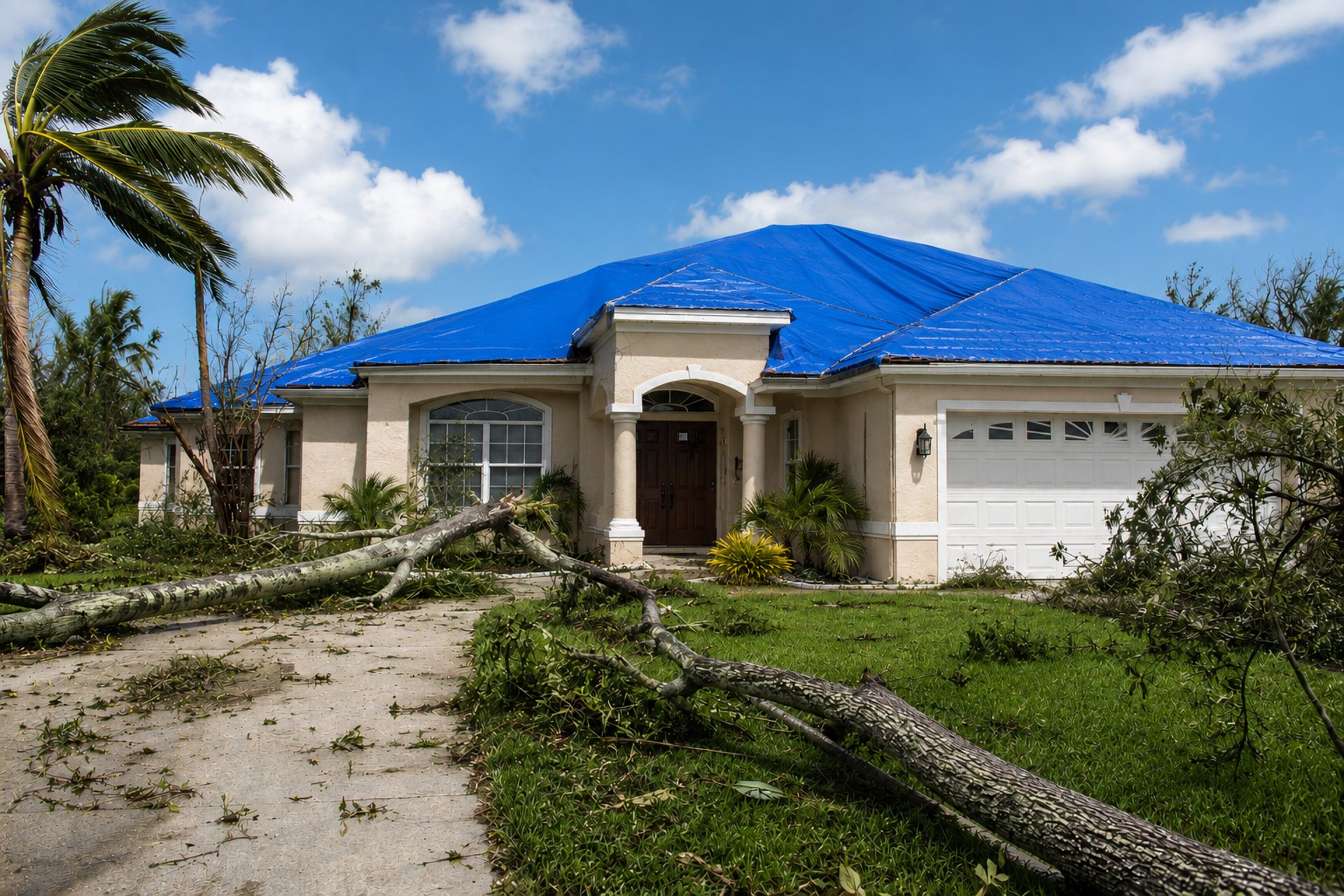
Emergency Roof Tarping & Roof Leak Help
Roof damage after hurricanes, severe storms, fallen trees, and high wind events can quickly expose a home to additional water intrusion and growing interior damage. Active roof leaks often continue worsening long after the original storm passes, especially during ongoing severe weather conditions across Florida, Georgia, and Alabama.
Fast emergency roof protection helps reduce additional damage and stabilizes the property while longer-term repairs are being arranged.
Call Now For Emergency Roof Damage Help
Compass Property Rescue helps homeowners dealing with roof leaks, storm-damaged roofing, fallen tree impacts, emergency roof tarping situations, and storm-related water intrusion across the Gulf Coast region.
Homeowners facing roof damage are often trying to quickly determine:
how to stop active leaks
whether emergency tarping is needed
how quickly water intrusion may spread
what temporary protection measures should happen first
how storm damage affects insurance claims
how long permanent repairs may take
Roof damage situations can become significantly more expensive when temporary protection and mitigation efforts are delayed.
Hurricanes & Severe Storms Often Damage Roofing Systems
Florida, Georgia, and Alabama regularly experience hurricanes, tropical storms, severe thunderstorms, and high wind events capable of causing major roof damage in a very short period of time.
Storm-related roof damage may include:
missing shingles
lifted roofing materials
punctured roofing systems
tree impact damage
exposed roof decking
flashing damage
structural roof damage
active leaks
gutter damage
attic water intrusion
Even moderate storms can weaken roofing systems and allow water intrusion into the home before major visible damage becomes obvious.
After hurricanes and severe weather events, homes often remain vulnerable to continued rainwater intrusion until temporary stabilization and permanent repairs are completed.
Roof Leaks Can Quickly Cause Interior Water Damage
Once a roofing system becomes compromised, water can rapidly spread into ceilings, insulation, drywall, flooring, cabinets, and electrical systems throughout the property. Roof leak situations commonly lead to:
ceiling stains
sagging drywall
soaked insulation
damaged flooring
mold concerns
electrical hazards
damaged personal belongings
interior water intrusion
Many homeowners initially underestimate how quickly active roof leaks can spread moisture throughout hidden structural areas.
Water intrusion may continue causing damage long after the original storm has ended, especially when damaged roofing materials remain exposed during additional rainfall.
Get Fast Help For Active Roof Leaks
Emergency Roof Tarping Helps Reduce Additional Damage
Emergency roof tarping is often one of the most important first steps after major storm damage.
Temporary roof protection may help reduce:
additional rainwater intrusion
worsening ceiling damage
insulation damage
mold concerns
electrical risks
escalating repair costs
Emergency tarping situations commonly involve:
hurricane roof damage
tree impacts
wind-damaged roofing
exposed decking
storm-created openings
active interior leaks
After major hurricanes and severe storms, contractor demand often increases dramatically across affected regions. Fast temporary protection can become critical while inspections, mitigation work, and permanent repairs are being arranged.
Fallen Trees & Structural Roof Damage
Tree impacts during hurricanes and severe storms can create significant structural damage to roofing systems and supporting areas of the home. Fallen tree situations may involve:
punctured roofing
collapsed roof sections
attic exposure
framing damage
broken trusses
severe interior water intrusion
debris hazards
Even when the visible opening appears limited, hidden structural and moisture damage may exist throughout surrounding roofing and attic areas.
Homes affected by tree impacts are often exposed to continued water intrusion until debris removal, temporary stabilization, and repairs can begin.
Need Emergency Roof Tarping Assistance? Contact Us Today
Insurance Claims After Roof Damage
Storm-related roof damage often involves inspections, temporary protection measures, mitigation work, documentation requirements, repair estimates, and insurance claim processing. Homeowners commonly have questions about:
emergency tarping
temporary repairs
leak mitigation
storm documentation
roof inspections
repair timelines
insurance coverage concerns
After major hurricanes and severe regional storm events, many homeowners also experience delays involving inspections, adjuster scheduling, contractor availability, material shortages, and repair timelines across heavily impacted areas. Documenting visible roof damage, active leaks, and temporary protection measures early in the process is often important during large-scale storm recovery situations.
Fast temporary protection and proper documentation are often important after major roof damage situations.
Some Roof Damage Situations Lead To Major Reconstruction
Severe roof failures and long-term water intrusion sometimes create major reconstruction situations involving:
structural repairs
ceiling replacement
insulation removal
drywall demolition
flooring replacement
mold remediation
framing repairs
extended rebuilding timelines
In some situations, portions of the home may become temporarily unsafe or difficult to live in during repairs.
Extended reconstruction timelines can create additional challenges involving pets, work schedules, school routines, insurance situations, and ongoing construction activity inside the property.
Some homeowners choose temporary RV housing placed on their property during major reconstruction projects. This can allow families to remain close to contractors, schools, work, pets, and personal belongings while repairs are completed.
Additional Living Expense (ALE) coverage through a homeowner’s insurance policy may help cover temporary housing costs in qualifying situations.
Compass Property Rescue understands the broader challenges homeowners face after severe roof damage and has resources available for homeowners dealing with temporary housing needs during major restoration projects.
Frequently Asked Questions
How quickly should emergency roof tarping happen after storm damage?
Emergency roof tarping should generally happen as quickly as possible after significant storm damage to help reduce additional water intrusion and worsening interior damage.
Can roof leaks continue causing damage after the storm passes?
Yes. Water intrusion may continue spreading through ceilings, insulation, drywall, flooring, and structural materials long after the original weather event ends.
Can fallen trees create hidden roof damage?
Yes. Tree impacts may damage structural framing, attic areas, insulation, and roofing systems beyond what is immediately visible from the exterior.
Does homeowners insurance usually cover storm-related roof damage?
Coverage depends on the policy and type of damage involved. Many roof damage situations involve inspections, temporary protection measures, mitigation work, and repair documentation.
Can severe roof damage require major reconstruction?
Yes. Extensive roof failures and long-term water intrusion can sometimes create large reconstruction projects involving structural repairs, demolition, and extended restoration timelines.
Get Fast Help After Roof Damage & Active Leaks
Roof damage and active leaks can continue worsening quickly after hurricanes and severe storms. Fast temporary protection and mitigation help stabilize the property and reduce additional interior damage.